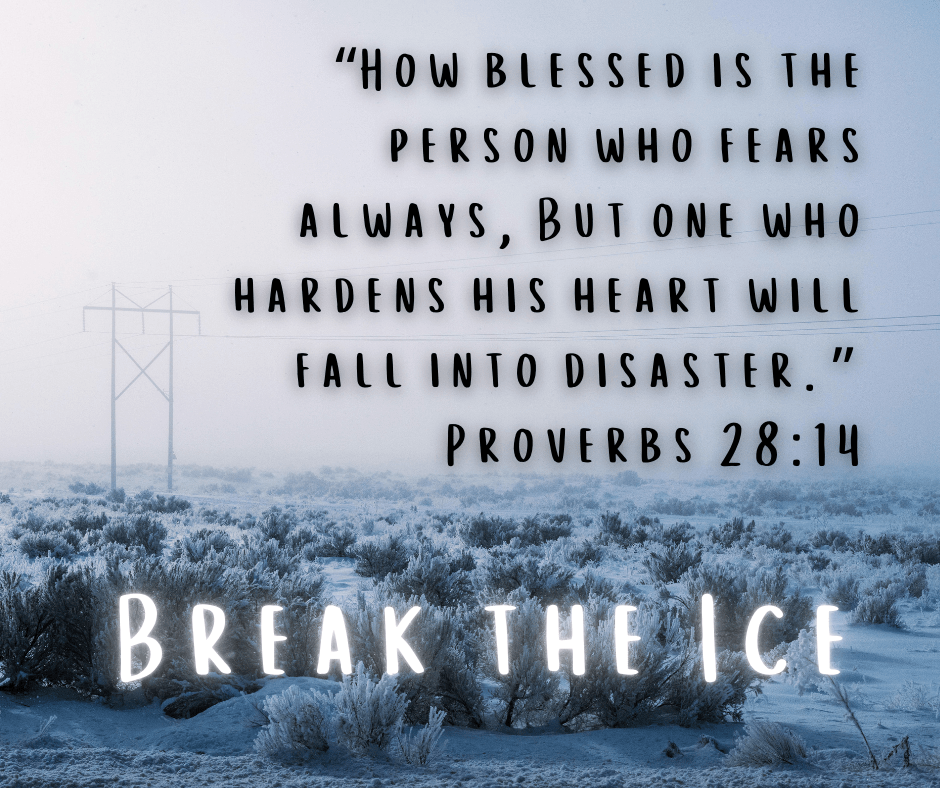
Have you ever been outside in the bitter cold for an extended period of time? I’ve done a lot of running in freezing weather, and I can tell you from experience—after a while, you lose feeling in your fingers, toes, nose, ears, and even your face. Eventually, you almost forget how cold it really is and are able to focus on running again. In other words, you go numb.
The word numb is defined as “deprived of the power of sensation, feeling, or responsiveness.” While there are many things we can become numb to, numbness is rarely viewed as a positive condition (unless you’re in surgery or at the dentist’s office!). Numbness usually means prolonged exposure to something has dulled its proper effect on you, leaving you unable—or unwilling—to respond as you should.
Since January is one of the coldest months of the year, it feels like an appropriate time to consider a form of numbness that is rarely discussed, yet deeply dangerous: spiritual numbness.
Although the modern word numb never appears in Scripture, the concept is woven throughout the Bible. Instead, Scripture uses words like hardened, calloused, seared, dull, blind, cold, asleep, and even dead. Biblical numbness is not merely emotional—it affects our relationships, our moral discernment, and ultimately our spiritual life.
Each week, we will examine spiritual numbness more closely. We will explore how numbness develops, the different forms it can take, the cost of remaining spiritually numb, and finally, how we can break the ice and awaken our hearts again.
Spiritual numbness is not a minor condition—it is serious and dangerous. Solomon warns us plainly:
“Blessed is the one who fears the LORD always, but whoever hardens his heart will fall into calamity” (Proverbs 28:14).
There are only two paths here: reverent fear that leads to blessing, or a hardened heart that leads to disaster. Scripture offers no neutral outcome for spiritual numbness.
David echoes this warning in Psalm 95:
“Do not harden your hearts, as in the rebellion, on the day of testing in the wilderness” (Psalm 95:8).
David’s warning also reveals something crucial—numbness is not accidental. It is a choice. We may not choose the circumstances we face, but we are responsible for guarding the condition of our hearts.
David explains why hardened hearts are so dangerous in Psalm 36:
“Transgression speaks to the wicked deep in his heart; there is no fear of God before his eyes.”
When we become numb to sin, we lose our fear of God. Both David and Solomon make clear that the fear of the LORD is the beginning of wisdom (Psalm 111:10; Proverbs 1:7; 9:10). Without that reverent fear, wisdom collapses.
Spiritual numbness often happens gradually, just as it did with the children of Israel in the wilderness. Its consequences are catastrophic because it dulls our discernment, silences conviction, and erodes our fear of God. That is why we must understand spiritual numbness—so we can recognize it, resist it, and ultimately break the ice that settles over our hearts, minds, and souls. #BreakTheIce #SpiritualNumbness