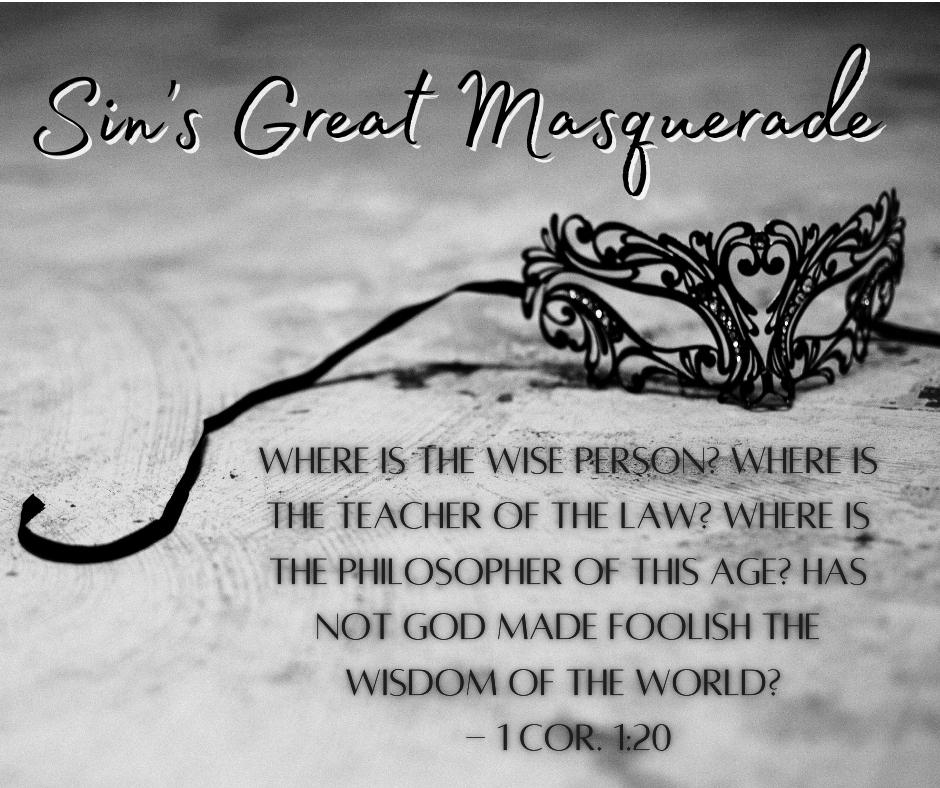
There is nothing wrong with loving to learn and pursuing knowledge. I love learning so much. In fact, I have a PhD in history, and I teach at a smaller liberal arts institution. Some people label me an “intellectual,” but that term can sometimes carry a negative or arrogant connotation. And, being an intellectual can often lead the arrogance, self-reliance, disconnection from others, and lack of true respect for God. So, I work hard not to get too big for my own britches, as my mom would say, because intellectualism can be a sneaky mask for the Devil.
ChatGPT defines intellectualism as:
the belief in or pursuit of knowledge, reason, and critical thinking as the primary means of understanding the world and solving problems. It emphasizes the importance of intellectual engagement, learning, and the cultivation of ideas, often prioritizing rational thought over emotional or instinctual responses. In broader terms, intellectualism can refer to a mindset or attitude that values academic achievement, thoughtfulness, and intellectual pursuits over material or superficial concerns.
The roots of intellectualism can be traced back to ancient civilizations, particularly in Ancient Greece around the 5th and 4th centuries BCE, where philosophers like Socrates, Plato, and Aristotle emphasized the importance of reason, knowledge, and the pursuit of truth through intellectual inquiry. All three of these philosophers lived and died centuries before the Apostle Paul. In fact, they were closer in time to contemporaries like Isaiah, Jeremiah, Daniel, Ezekiel, Ezra, Nehemiah, and Malachi than to Jesus or the Apostle Paul. By the time Paul was writing about the dangers of intellectualism, these philosophers’ ideas were deeply entrenched in academia and the public sphere, particularly in Rome. The pursuit of knowledge and reason, coupled with the desire to showcase one’s intelligence, was a prominent feature of both Roman and Greek societies.
This explains why Paul begins his letter to the Corinthians with a long discussion on God’s wisdom versus man’s wisdom:
For the message of the cross is foolishness to those who are perishing, but to us who are being saved it is the power of God. For it is written: “I will destroy the wisdom of the wise;
the intelligence of the intelligent I will frustrate.” Where is the wise person? Where is the teacher of the law? Where is the philosopher of this age? Has not God made foolish the wisdom of the world? For since in the wisdom of God the world through its wisdom did not know him, God was pleased through the foolishness of what was preached to save those who believe. Jews demand signs and Greeks look for wisdom, but we preach Christ crucified: a stumbling block to Jews and foolishness to Gentiles, but to those whom God has called, both Jews and Greeks, Christ the power of God and the wisdom of God. For the foolishness of God is wiser than human wisdom, and the weakness of God is stronger than human strength. – 1 Cor. 1: 18-25
Paul tells the Corinthians that those who prioritize intellectualism and earthly wisdom over God’s truth are fools. He even emphasizes that God intentionally chose a method of salvation that appears foolish to those who consider themselves wise in their own eyes. Why? Because it showcases the superiority of God’s power and wisdom. Paul tells them that even the “foolishness” of God is wiser than human wisdom. Therefore, those who rely on their own understanding over God’s truth are the real fools.
The Scriptures of full of warnings about being wise in your own eyes and trusting in human wisdom over God’s:
For the wisdom of this world is foolishness in God’s sight. As it is written: ‘He catches the wise in their craftiness. – I Cor. 3:19
See to it that no one takes you captive through hollow and deceptive philosophy, which depends on human tradition and the elemental spiritual forces of this world rather than on Christ. – Col. 2:8
Such ‘wisdom’ does not come down from heaven but is earthly, unspiritual, demonic. For where you have envy and selfish ambition, there you find disorder and every evil practice. But the wisdom that comes from heaven is first of all pure; then peace-loving, considerate, submissive, full of mercy and good fruit, impartial and sincere. – James 3:15-17
Although they claimed to be wise, they became fools. – Romans 1:21
Do not be wise in your own eyes; fear the Lord and shun evil. – Proverbs 3:7
Woe to those who are wise in their own eyes and clever in their own sight. – Isaiah 5:21
Jesus tells us how to rip away the mask of intellectualism.
Truly I tell you, unless you change and become like little children, you will never enter the kingdom of heaven. – Matthew 18:3
We must recognize our true position relative to God. He is our Creator, and we are the created. The created can never be greater than the Creator. It is when we begin to equate our own knowledge with God’s, or when we prioritize earthly knowledge over seeking God, that we become fools. Instead, we must follow Jesus’ instructions and become like children—humble, eager to listen, and ready to learn. #SinsGreatMasquerade
 Adonai's Appeal